The Future of Food: Can science feed the world?
00:00:11 Simon Gaisford
Welcome to Life Sciences at University College London, The Big Questions.
00:00:16 Simon Gaisford
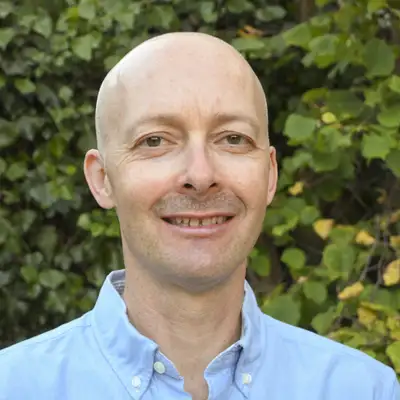
I'm your host, Simon Gaisford, and I'm a Professor of Pharmaceutics and Vice Dean at UCL's Faculty of Life Sciences.
00:00:22 Simon Gaisford
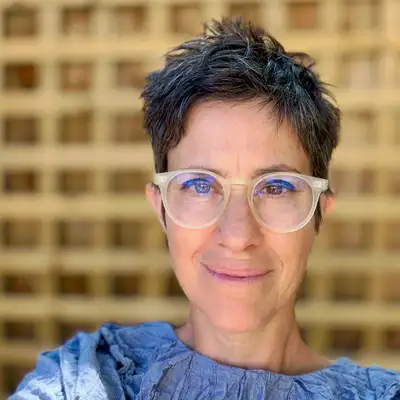
Today's guest is Professor Gail Taylor, Quain Professor of Botany at University College London and Dean of the Faculty of Life Sciences.
00:00:31 Simon Gaisford
Welcome to the podcast.
00:00:33 Gail Taylor
Thank you very much, Simon.
00:00:34 Gail Taylor
It's a pleasure to be here.
00:00:36 Simon Gaisford
So, your opening question, your starter for 10 as it were.
00:00:39 Simon Gaisford
Your work has long focused on the intersection of plant science, sustainability and food security.
00:00:44 Simon Gaisford
What first inspired your commitment to this field and why has it become such a global issue?
00:00:50 Gail Taylor
Well, I was thinking about this, I mean going back to school days, you know when most of us get interested in biology and life sciences, it's usually the animals that we find fascinating.
00:01:00 Gail Taylor
But actually I really found plants fascinating and one of the early things I remember is this amazing ability of plants to recreate themselves.
00:01:12 Gail Taylor
So, if we take a few cells of a plant, a stem, that stem can make a whole plant if we treat it properly.
00:01:20 Gail Taylor
And so that's a process we call totipotency.
00:01:24 Gail Taylor
That's pretty unique to plants.
00:01:26 Gail Taylor
So in animals you have to have all sorts of germ lines and it doesn't happen.
00:01:32 Gail Taylor
So I can take a piece of a leaf or a piece of a stem and recreate a whole plant and grow a food crop.
00:01:38 Gail Taylor
And I found that quite inspirational and interesting.
00:01:43 Gail Taylor
And coupled to that, the other big childhood thing I remember is that my grandmother during the Second World War turned over the whole of her garden to food production as many women did.
00:01:55 Gail Taylor
She had three young children. Her husband died during the war and she never turned it back.
00:02:01 Gail Taylor
And so her garden was just an amazement of growing food.
00:02:05 Gail Taylor
It was wonderful. I was really into that. And the other amazing thing is she didn't have a fridge. So she had all these wonderful mechanisms for preserving, keeping fresh vegetables to make sure that… So it was about plants producing food to feed a family in that home.
00:02:25 Gail Taylor
And I think that's significant. Some would think that many of us have lost.
00:02:29 Simon Gaisford
Yeah.
00:02:30 Simon Gaisford
I think we lose that connection, don't we, between where our food comes from.
00:02:33 Simon Gaisford
It's too easy to go down to the supermarket and see things in pre-packaged containers and forget where food comes from.
00:02:40 Gail Taylor
And only do that once a week, let's say.
00:02:43 Gail Taylor
We've been indoctrinated when supermarkets came along.
00:02:47 Gail Taylor
This concept that you do a weekly shop.
00:02:50 Gail Taylor
And the problem with that is it creates food waste.
00:02:55 Gail Taylor
So about 1/3 of all of our calories that we buy in food is wasted.
00:03:02 Gail Taylor
We just waste it.
00:03:03 Gail Taylor
We buy it and waste it because we don't buy as we need it.
00:03:07 Gail Taylor
And it's kind of linked to societal change, to career households, convenience.
00:03:13 Gail Taylor
But that leads to all sorts of other things because we're now obviously eating a lot of ultra-processed food as part of that supermarket shop.
00:03:21 Gail Taylor
And this loss of connection with food culture, if you like, is really important.
00:03:29 Gail Taylor
And that food waste thing, it varies across the globe in sort of developed societies like ours, we waste the food, consumers.
00:03:38 Gail Taylor
Whereas in low and middle income countries, it's the food chain that doesn't work.
00:03:43 Gail Taylor
There's no cold chain.
00:03:45 Gail Taylor
The foods aren't preserved in any way.
00:03:48 Gail Taylor
So it's lost before it even gets to the consumer.
00:03:51 Gail Taylor
But it's this huge waste of planetary resources that we're not really addressing.
00:03:55 Simon Gaisford
Yes, I've just read the book Ultra Processed People by our UCL colleague, and there were some extremely worrying stories in there and stats as well.
00:04:08 Simon Gaisford
I read that stat about how much food we waste as a country, which is terrible.
00:04:12 Simon Gaisford
When we talk about food security, for people that don't know, what do we mean by food security?
00:04:17 Gail Taylor
Well, we mean when all of the people all of the time have access to adequate food for their nutritional needs and
00:04:25 Gail Taylor
An amazing thing is that every day on this planet, about 700 million people do not have adequate nourishment.
00:04:36 Gail Taylor
They have inadequate food in some way.
00:04:40 Gail Taylor
But the counter to that, the other statistic is about a billion people on the planet are either overweight or obese.
00:04:49 Gail Taylor
So we have this incredible disconnection in our food system that we've come to at this point in our history.
00:04:56 Simon Gaisford
So those numbers together, that would mean that globally we are producing enough food to feed everyone, but the reality of the situation is we're not.
00:05:06 Gail Taylor
Globally, science has done its job.
00:05:09 Gail Taylor
Science was asked to increase food production, make food production efficient and effective and that has been done.
00:05:20 Gail Taylor
And there is some amazing sort of nations who've done incredibly well, like Brazil.
00:05:25 Gail Taylor
Brazil turned from being a food importing nation to being a food exporting nation.
00:05:31 Gail Taylor
So as a globe, we produce enough food.
00:05:34 Gail Taylor
The problem is it isn't always in the right places and it's not distributed in a meaningful way to address low-income families in areas of the world like sub-Saharan Africa.
00:05:48 Simon Gaisford
Yeah, but even that statistic about Brazil is kind of interesting, isn't it?
00:05:52 Simon Gaisford
Because they've done that, if I'm following Chris's book correctly, they've done that by removing quite a large area of rainforest and replacing it with soybean in the main.
00:06:00 Simon Gaisford
So they're one of the world's largest producers of soybean. But then that's had its own downstream consequences, hasn't it?
00:06:06 Simon Gaisford
So if I'm understanding it correctly, large areas of soybeans reducing diversity, floral diversity, and it's also changing weather patterns across Brazil.
00:06:15 Simon Gaisford
So areas that would historically have had a lot of rainfall are now not seeing so much rainfall, which is affecting the ability to grow crops, but it's the crops they're growing which have caused the falling rain.
00:06:28 Simon Gaisford
It's kind of like a vicious circle.
00:06:29 Gail Taylor
You're absolutely right.
00:06:30 Gail Taylor
And what it sort of highlights is that this food system is embedded in the natural world really.
00:06:39 Gail Taylor
So it's land-based resources or ocean-based resources for fish or river-based resources.
00:06:46 Gail Taylor
So we have these natural resources that we somehow have to corral in a much more sustainable way to be effective globally.
00:06:58 Gail Taylor
So that issue of Brazil, it's a good exemplar actually in that they took a land sparing approach.
00:07:09 Gail Taylor
So they decided as a nation, we will spare some of our land, our rainforest, because we need to use that for food.
00:07:19 Gail Taylor
The counter to that is the UK where we have a land sharing approach where kind of when we go for a walk on a Sunday, it might be in an agricultural landscape.
00:07:31 Gail Taylor
So our land is pretty small. So we try to share it for wildlife and for nature and for the delivery of all of these things we called ecosystem services.
00:07:42 Gail Taylor
But going back to Brazil, so what we're arguing, we might argue is that does this land sparing work?
00:07:51 Gail Taylor
Could we have parts of the world which are really intensive agricultural food production, the soybean in that instance.
00:08:02 Gail Taylor
And we might argue that we could, because there are some areas of the world that aren't that important for nature.
00:08:11 Gail Taylor
I'm not saying that's the Brazilian case, but we could imagine there'd be these intensive production areas that produce large and significant amounts of crops and livestock.
00:08:26 Gail Taylor
But that's the debate. That's the debate we're not having.
00:08:29 Gail Taylor
What's happening is you have a sort of random sort of generation of nations doing their own thing.
00:08:36 Gail Taylor
So that was obviously very good for Brazil. It's made them financially, it's made them in this very strong position. They export the soybean. It's mostly genetically modified. And it's done incredible things for them as a nation.
00:08:55 Gail Taylor
Now, you're right that it's had an impact on biodiversity, but we have to counter that with other aspects of where we can achieve a lot, where we can stop the loss of biodiversity, which we must do.
00:09:11 Simon Gaisford
So what's tricky here, at least as I see it, is that this sort of conversation, which sounds eminently sensible, if you were an alien outside of the earth looking down the earth, you think, that would be a really sensible way forward, wouldn't it?
00:09:22 Simon Gaisford
Everybody gets together and says we're going to use that area over there for producing crops, maybe that area over there for growing animals and so on. And we're going to keep these really important and diverse rainforests and other flora.
00:09:34 Simon Gaisford
But that doesn't happen, does it?
00:09:36 Simon Gaisford
And presumably it doesn't happen because personal interests and politics, economics, and I'm sure a myriad of other issues all get in the way.
00:09:46 Gail Taylor
It doesn't happen.
00:09:47 Simon Gaisford
No.
00:09:49 Gail Taylor
It's happening less than it was in the past.
00:09:54 Gail Taylor
So, we can look to nations and then we can look to global governance and global governance around trade for food complex. But there are some frameworks like, FAO, the Food and Agriculture Organization is a global entity which nations pay into.
00:10:13 Gail Taylor
IPCC is meant to be getting us on a better track to address climate change.
00:10:18 Gail Taylor
IPBES is the global entity that is meant to be enabling us to stop the loss of biodiversity.
00:10:27 Gail Taylor
So bringing these entities together, we should be able to come up with targets, there's a target for biodiversity. We will stop 30% loss by 2030.
00:10:39 Gail Taylor
We're going to miss that target.
00:10:41 Gail Taylor
There are the sustainable development goals for 2030.
00:10:43 Gail Taylor
We're probably going to miss most of those.
00:10:46 Gail Taylor
And we're missing the climate change goals.
00:10:49 Gail Taylor
So the concentration of carbon dioxide is now 50% more than before the industrial revolution. 50%, it's now at around 430 ppm. That is significant. And it's still rising, despite what you may hear on the BBC. I shouldn't call out our nation's great treasure.
00:11:14 Gail Taylor
But for example, the UK is a very good example of a developed nation. The government will tell us, hey, we've done amazingly well. We've reduced our carbon dioxide emissions by 50%.
00:11:30 Gail Taylor
But when you take into account all the offshoring we've done, so if you buy a fridge from China, we've actually more than doubled our output in the last 30 or so years.
00:11:41 Gail Taylor
So global governance needs to work. That's the first thing. It's not as good as even it was five years ago.
00:11:48 Gail Taylor
And then we need transformative solutions just as you said that bring together whole of society, governance, the financial markets are incredibly important in this because they control a lot of what happens in the world.
00:12:03 Gail Taylor
We need to bring technology to play, knowledge and indigenous people, policy regulation and some of that needs to start more locally and to build out and we're not quite there yet.
00:12:17 Simon Gaisford
So before UCL, you were obviously out in California, and you still have a research group out in California. And that was all about looking at plants and biomass production and things like that. Tell us about what you were doing there.
00:12:31 Gail Taylor
Well, we still doing it actually. In fact, tomorrow, the NASA Jet Propulsion Lab from LA, NASA will fly over my field site to take images to look at the function of our trees.
00:12:43 Gail Taylor
So we currently have 15 acres of trees. And these are trees, not for food, they are trees that we're turning into sustainable aviation, jet fuel.
00:12:54 Gail Taylor
So they're the fastest growing trees in the northern hemisphere, poplar.
00:12:58 Gail Taylor
And so we are working with the National Laboratory at Oak Ridge to make the fuel to address another sustainability issue.
00:13:08 Gail Taylor
So, you know, energy is critically important. Plants can be part of that solution.
00:13:13 Gail Taylor
On the food side, I was more interested in my passion in California, which is leafy greens. So we did a lot on leafy greens and California is the lettuce producing centre of the world.
00:13:28 Simon Gaisford
Wow.
00:13:29 Gail Taylor
California.
00:13:30 Gail Taylor
I did not know that.
00:13:32 Gail Taylor
The iceberg.
00:13:33 Gail Taylor
Do you know the story of the iceberg lettuce?
00:13:35 Simon Gaisford
No.
00:13:36 Gail Taylor
Well, California started growing lettuce early on and to transport fresh lettuce to the East Coast. That wasn't working. It was going off and going all sort of wilsy and horrid.
00:13:52 Gail Taylor
So they developed a variety that would sit on ice during the truck ride from the West Coast to the East Coast. And that was the iceberg lettuce.
00:14:03 Gail Taylor
So it could be packed in ice and it would tolerate the journey. So lettuce in California is huge.They supply the whole of the US.
00:14:13 Gail Taylor
If you think about it, lettuce goes everywhere. It's the filler for so many things, every sandwich you eat. So it's incredibly important as a base leaf. The trouble is its nutritional value is important.
00:14:29 Simon Gaisford
In fact, what does it provide? Maybe a bit of fibre?
00:14:32 Gail Taylor
Well, a lot of water. Lettuce is a member of the sunflower family.
00:14:41 Simon Gaisford
Is it? I'm learning stuff here.
00:14:44 Gail Taylor
So if you go back to wild lactuca, that's the Latin, and you did a metabolic profile, it's full of all these really funky secondary chemicals which provide us, they are the health-giving chemicals.
00:14:59 Gail Taylor
Quercetin, for example, is a big one. All the polyphenolics, amazing chemicals.
00:15:05 Gail Taylor
So we've done this with a wild collection in the population that I work with in California.
00:15:11 Gail Taylor
If you, on the other hand, run a metabolic profile for modern lettuce, all of those have disappeared. So the antioxidant status is low. All these health-giving chemicals are gone.
00:15:24 Gail Taylor
So our mission is to try to get them back.
00:15:28 Gail Taylor
But it's an interesting question to us, why did we do that?
00:15:31 Simon Gaisford
Yeah, absolutely.
00:15:32 Gail Taylor
Why?
00:15:33 Simon Gaisford
It's not just lettuce either, is it?
00:15:34 Simon Gaisford
I think if we were to look at most fruit and vegetables, they are nutritionally poor relative to even 100 years ago.
00:15:40 Gail Taylor
They are. And climate change is exacerbating that because the rise in carbon dioxide is diluting the protein content of plants.
00:15:48 Gail Taylor
It's well known. So our food is getting worse and worse. And why has it been done?
00:15:52 Gail Taylor
Well, if you go, as you say, all the wild relatives of like tomatoes, strawberries, lots of things, it's because the business model has been about plant breeding for yield and disease resistance.
00:16:05 Gail Taylor
So kind of flavour, taste, nutritional quality. There's no business model for it.
00:16:12 Gail Taylor
So if I say to a grower, I want to grow this high nutrient crop, they would say to me, but it doesn't get me more profit when I sell the crop. If you can grow me a bigger lettuce, that's good.
00:16:26 Simon Gaisford
Faster that lasts longer before it goes off.
00:16:28 Simon Gaisford
Absolutely.
00:16:29 Gail Taylor
So, but that is changing now. There are lots of heirloom varieties coming along and we're interested in the public, certainly in the places where we live, the developed nations are beginning to understand that that's really important.
00:16:45 Simon Gaisford
Yes.
00:16:46 Simon Gaisford
Two things I was going to say.
00:16:47 Simon Gaisford
One, please tell me you're going to do a review article entitled, This is the Tip of the Iceberg.
00:16:53 Simon Gaisford
And 2.
00:16:54 Gail Taylor
Yes, I am now. I'll even have you in the credits.
00:16:58 Simon Gaisford
Thank you.
00:17:01 Simon Gaisford
And 2, at least in my view in this country, and I'm sure a number of countries in the world, you know, people are becoming aware, aren't they, of the nutritional content of food.
00:17:12 Simon Gaisford
I think if I ask most of my friends, you know, do you feel that lettuce is something that you'd eat for its nutritional content? They’d say absolutely not.
00:17:19 Simon Gaisford
And it's funny, isn't it? People sort of recognise this as a problem, but there's not so much of the will to do something about it.
00:17:26 Gail Taylor
But there is a leafy green you should be eating for its nutritional content. And that's the most nutrient dense leaf on the planet.
00:17:34 Gail Taylor
And that's watercress.
00:17:35 Simon Gaisford
Is it watercress?
00:17:36 Gail Taylor
Yeah, nasturtium officinale.
00:17:38 Gail Taylor
So watercress is packed full of vitamins, iron and a very important group of chemicals called the glucosinolates.
00:17:50 Gail Taylor
So the glucosinolates have been shown in all the peer reviewed literature, proven without a doubt, that this can impact cardiovascular health. It has impacts on cancer prevention and metastatic cancer progression in breast cancer, infection and immunity.
00:18:15 Gail Taylor
There are even links now between consumption of this type of crucifer, cabbage family vegetable, and your gut microbiome.
00:18:22 Simon Gaisford
Are there?
00:18:23 Gail Taylor
Yes. So the evidence is becoming really potent.
00:18:27 Gail Taylor
So if you do one thing in your life, Simon, it's eat watercress every day.
00:18:32 Simon Gaisford
Why? If you said to me, name a vegetable that you think is a superfood? I'd say broccoli.
00:18:40 Gail Taylor
Yes.
00:18:40 Simon Gaisford
Now, is that because I'm just one of those sops that's been marketed to by the broccoli marketing campaign or whoever they're called?
00:18:51 Simon Gaisford
Is that a superfood?
00:18:51 Simon Gaisford
And my follow-up question also is why then if watercress is such a superfood, why do we not know that?
00:18:57 Gail Taylor
If I asked you that question in California, you'd say kale.
00:19:00 Simon Gaisford
Yeah.
00:19:01 Gail Taylor
And I would be able to tell you that the nutritional, the nutrient density, the impact of watercress beats both of those.
00:19:08 Simon Gaisford
Does it?
00:19:08 Gail Taylor
Yeah.
00:19:09 Gail Taylor
Kale, in particular kale, that's good, but we can beat it.
00:19:15 Gail Taylor
The broccoli is quite interesting in that it has, there is a beneforte broccoli, which has been bred for these exact same chemicals that I'm talking about.
00:19:24 Gail Taylor
And the glucosinolates are there. So it's a pretty good thing to eat.
00:19:27 Gail Taylor
The problem is that quite a lot of the population have a gene which finds that extremely bitter and unpalatable.
00:19:36 Simon Gaisford
Oh, really?
00:19:36 Gail Taylor
Yeah, but anyway, that aside, that was a good marketing campaign.
00:19:43 Gail Taylor
Why should you be eating it? And why haven't we been successful in getting it? It's an image problem. Watercress is an old person's food.
00:19:53 Simon Gaisford
Watercress has an image problem.
00:19:58 Gail Taylor
Yes. So, I feel a bit sorry for watercress. You may not know this, but we had the Watercress Festival.
00:20:04 Simon Gaisford
I did not know that.
00:20:05 Gail Taylor
In Hampshire.
00:20:06 Simon Gaisford
Oh, good Lord.
00:20:06 Gail Taylor
About 18,000 people turned up.
00:20:08 Simon Gaisford
18,000 people.
00:20:10 Gail Taylor
Yeah, and it was the World Watercress Eating Championship, which happens every year.
00:20:16 Simon Gaisford
Why does this not happen in Kent?
00:20:18 Gail Taylor
You do grow a bit of watercress in Kent. Because Hampshire is the watercress growing capital of the UK.
00:20:24 Simon Gaisford
Is that why you live there?
00:20:26 Gail Taylor
Yes.
00:20:27 Gail Taylor
No.
00:20:29 Simon Gaisford
Wow.
00:20:30 Simon Gaisford
I went to Faversham's classic car show at the weekend, which I think was the biggest thing going on in Kent. There must have been maybe, I don't know, 200 people.
00:20:37 Gail Taylor
So watercress traditionally was a poor, I loved it in the States when I was based in California because I was able to say, guys, you think you invented fast food? You didn't.
00:20:50 Gail Taylor
And I'd show them the story of watercress because watercress was grown in chalk streams, which are abundant in Hampshire, as a winter crop for farm workers to get some leafy green crop, to get some nutrition, particularly in the winter.
00:21:07 Gail Taylor
And very quickly, when the steam train came to Hampshire, a town called Alresford, they would send the women off with baskets of watercress and bread and they'd go to the streets of London and sell watercress sandwiches.
00:21:21 Gail Taylor
That was the first fast food. It's all documented. So it's really interesting history.
00:21:26 Gail Taylor
But now, so it has an image problem. So we're trying to get watercress into smoothies, shots. No, post-exercise DNA damage can be repaired if you have it. So there's lots of things like that.
00:21:40 Simon Gaisford
Watercress needs a social media manager.
00:21:42 Gail Taylor
Yes, I agree.
00:21:45 Gail Taylor
So one of the things we're working on is these chemicals, the glucosinolates, they give watercress that peppery, mustardy flavour.
00:21:54 Gail Taylor
And quite a lot of our younger generation, they don't have the palate for that. They're entrained to more sweet food. So we're trying to change the palate of it a little bit to make it a bit flatter and sweeter without losing those important chemicals.
00:22:10 Gail Taylor
Now I love bitter food and indeed the supermarkets tell me that they have changed the UK palate over 30 years. So we now eat rockets and other bitter leaves. But it's really that trade-off between sort of sweetness and bitterness.
00:22:27 Gail Taylor
But it's an image thing that how if you had a mass marketing campaign. Just think of some of the things that get marketed in that way. It's like, I'm a gardener. If something gets on Gardener's World on Friday evening with Monty Don, that is a sellout.
00:22:41 Simon Gaisford
Yeah, absolutely. Absolutely.
00:22:43 Simon Gaisford
Yeah, we need William and Kate to be big watercress eaters, don't we?
00:22:48 Simon Gaisford
That's interesting, isn't it? There are so many questions I could ask here as a follow-up.
00:22:52 Simon Gaisford
I mean, the bitterness thing is interesting, isn't it? Bitterness in nature is usually a sign of something bad for you. I think we have bitter receptors as a warning. And also bitter foods are sort of things that you get more used to as you get older.
00:23:10 Simon Gaisford
So if you think about tonic water, that's quite bitter, isn't it? No child wants that. Bitter chocolate, black coffee, there's a whole load of bitter things that a human palate seems to move towards as you get older. So that's a tricky one.
00:23:26 Gail Taylor
I wonder if that's entrained or inherited because I really, because obviously me being me, I used to feed my children very bitter leaves. And you can't.
00:23:35 Simon Gaisford
Well, if you didn't, no one would.
00:23:36 Gail Taylor
Exactly.
00:23:37 Gail Taylor
But those bitter chemicals, you're right. They are the defence chemicals. So when an insect attacks in nature, watercress leaf, those chemicals are released. And indeed, the glucosinolates are hydrolysed to another enzyme called, another chemical activated through an enzyme called myrosinase, and the chemical’s called phenyl ethyl isothiocyanate.
00:24:05 Gail Taylor
So that's the chemical that's the active chemical. It's quite difficult to work with, so we abbreviate to glucosinolates.
00:24:11 Gail Taylor
But they are, these bitter chemicals are what… They're defense chemicals largely for insects, but they're incredibly powerful in human health.
00:24:22 Gail Taylor
And we know that 50% of chemotherapy drugs originate in plants originally. And then they're modified or synthesized or whatever. They come from the natural world. So it's not surprising. And that we've evolved with these foods. So it's not surprising that there's that interaction.
00:24:43 Simon Gaisford
No, and with my School of Pharmacy hat on, I can say the majority of drug substances are very bitter as well. And it's just so bitterness is usually a sign from nature that what you're about to eat is going to have a pharmacological effect.
00:24:57 Simon Gaisford
The question is whether that pharmacological effect is good or bad. And I think we could probably argue most drugs are in some sense toxic. It's just that we're controlling that level of toxicity to get to an effect that we want.
00:25:10 Gail Taylor
Yes, also true with the glucosinolates. If you, know, you can go too much the other way. So they can be toxic, yes. But yeah, not at the concentrations we're talking about.
00:25:21 Gail Taylor
So watercress, yeah, you've got to eat watercress.
00:25:25 Gail Taylor
But more importantly than that, we've developed some unique genomic resources. We've sequenced the genome of watercress. We've made this collection of wild accessions and we've bred down to F9. So we've like taken the grandchildren of the grandchildren of the grandchildren.
00:25:44 Gail Taylor
So we've got these F9 lines that we've tested with cancer geneticists on their breast cancer cell lines to show how they can kill cancer cells. And so we have some watercress that's sort of two to four times more effective in its ability to do that.
00:26:04 Gail Taylor
And then, there's another mechanism for metastatic breast cancer that watercress, the chemicals interfere with the transcription factor which stops angiogenesis, blood supply to metastatic cancer cells. So there's another pathway also known.
00:26:24 Gail Taylor
So we've got some really interesting material and we have a new PhD starting to try and commercialise that.
00:26:30 Simon Gaisford
I think you touched on this earlier actually, but if watercress is a superfood and people are put off eating it because of its bitterness, then as you said, selective, I don't want to say genetically modifying, but selectively breeding to take its bitterness down and maybe its sweetness up, that would be a way forward.
00:26:51 Simon Gaisford
But do you think that's, in principle, maybe, that's not that different from what some of the large food companies, I suppose, are doing in terms of trying to make foods that are not very nutritious at all? I'm back to Chris's book again. Palatable, isn't it?
00:27:05 Gail Taylor
Well, sweet corn is that in that several genes for sweetness for the sort of carbon metabolism pathways were discovered and bred into corn maize to make sweet corn. So we know it works and this would be taking it the other way. But why shouldn't we talk about genetic modification and gene editing?
00:27:32 Gail Taylor
That's one way to do things and the UK has now another way of looking at gene editing as opposed to just GM. So editing where we can take sort of molecular scissors and be very precise about what we do and if we can show that in that editing way, we've done, we haven't done anything that couldn't be done through sort of natural breeding.
00:27:57 Gail Taylor
It will be acceptable. It would be a precision bred sort of genotype. So I mean, but that is what plant breeders do. There's sometimes, sometimes the public doesn't really understand that we've been eating plant bred foods for like 10,000 years and at the end of the pipeline.
00:28:18 Simon Gaisford
Yeah, It's tricky, isn't it, that people see genetically modified and it's a massive red flag for people. And I guess that goes back all the days that the tobacco mosaic virus and things like that, doesn't it?
00:28:30 Simon Gaisford
And then you're putting genes from one species into another and that's where people are a bit uneasy. But actually hybridisation or selective breeding is actually nature’s way of mixing up genes. It's just the same, isn't it?
00:28:43 Gail Taylor
Yeah, we just found a faster way of doing it. And also some things in plant breeding that the public might think, oh, that's, oh, really, do you do that? Like mutagenising seed to get weird and wonderful variety. You have to have genetic variation that you can select and breed from.
00:29:02 Gail Taylor
So some of those things that, those are the ways that we've supplied food, that we've changed the wheat, the height of wheat from sort of 3 metres to 1 metre. And that doesn't happen by magic. That's breeding selection.
00:29:18 Simon Gaisford
Absolutely. Now, I was just thinking at home, I've got a completely bonkers dog cockapoo. And that is, of course, a good one. That is a crossbreed, isn't it? It's not a species in his own right. That's right.Yeah.
00:29:29 Simon Gaisford
I'll just circle back to some of the things that we talked about earlier, actually, if you don't mind. So one of them, I love this idea that NASA is going to go over your fields and take some views of the crop.
00:29:41 Simon Gaisford
How does a tree get turned into rocket fuel or jet fuel?
00:29:47 Gail Taylor
Jet fuel.
00:29:50 Gail Taylor
Well, trees, the wood is about 50% carbon and then some other chemicals and fibers. Yes, cellulose, fibrous stuff.
00:30:02 Gail Taylor
And so, we can think of that as a raw material. So, for the past 100 or 200 years, we've been taking the raw material out of the earth, which is oil.
00:30:16 Gail Taylor
So we've been taking fossil fuel-based resources. So here is the bio resource of the future. And I do believe that in the future the bioeconomy will be what drives the economy.
00:30:29 Gail Taylor
Why do I think that? It has to because oil is a finite resource and we're burning through it at quite some rate. So you should see these trees as part of a bigger thing called the bioeconomy.
00:30:44 Gail Taylor
So one thing we'd like to make is this sustainable aviation fuel and that's what our project's been focused on. But there might be other things from some of the other bits of the woods. So there are various biochemical routes to do that.
00:30:57 Simon Gaisford
So it would be to turn into kerosene.
00:30:59 Gail Taylor
We can, yes. So we can do that through what we call a sort of an enzymatic fermentation route, or we can do it through a pyrolysis route.
00:31:09 Gail Taylor
And we're exploring those and it becomes incredibly complicated because I can grow a tree.I can even grow a tree very fast. I can even grow a tree even faster because we are testing various means to do that.
00:31:27 Gail Taylor
To turn that tree into a fuel is the difficult bit.
00:31:33 Gail Taylor
So then it goes to our bioprocessing group who figure out how do we mash this wood up to release the chemicals we're interested in and how do we separate out like the waste?
00:31:45 Gail Taylor
Yeah.
00:31:45 Simon Gaisford
That's one. And what do we do with that waste?
00:31:47 Gail Taylor
And what do we do with it?
00:31:48 Gail Taylor
That's one group.
00:31:50 Gail Taylor
And then there's the next group, which is like the biorefining group who… jet fuel is incredibly complicated and I'm pleased to say highly regulated.
00:32:01 Simon Gaisford
That's good to know.
00:32:03 Gail Taylor
So even now at airports like LA, I think it's 10 or 20% at the moment of jet fuel is biofuel. But it's coming from waste. It's coming from municipal waste and waste streams. So they've got some transformation routes worked out and that's working reasonably well. The problem is it's difficult to scale to make it work. So our trees will be part of that.
00:32:29 Gail Taylor
And we're still not entirely sure which route we will get to jet fuel, but we've got some preliminary ideas that we're now taking with a sort of agency for testing. So yes, complicated.
00:32:45 Simon Gaisford
Interesting though, isn't it?
00:32:47 Simon Gaisford
I know from having been to Brazil a few times that one of the interesting things about Brazil, I'm sure you know, is if you get out of a taxi for instance and breathe in, it smells very ethanolic and the reason is because a lot of biofuel is produced, ethanol is produced in Brazil and the cars run on ethanol but they don't burn it completely cleanly so you can smell it.
00:33:08 Simon Gaisford
So I suppose another one of my questions is going to be, you know, another option would be to grow sugar cane or sugar beet or something like that for ethanol production. Do you think that there's been a reluctance to go down that route because the sorts of countries that can grow sugar… the best crop for ethanol production is sugarcane and those are obviously grown in hot countries. Do you think there's a slight reluctance in the West to push for sugarcane when it's a crop they can't necessarily grow themselves?
00:33:38 Gail Taylor
No.
00:33:40 Gail Taylor
So sugarcane is an interesting one. Sugarcane in Brazil can be extremely efficiently grown actually. The problem is that globally, global governance has worked a bit actually because it said we can't afford to use food growing land to make fuel because food growing land will be limited in future.
00:34:06 Gail Taylor
And so for example, when the EU, when Europe first thought, hey, biofuels, that's a great idea. They're renewable, they're sustainable. We need them. Suddenly realised, we don't grow them. So they started importing like soy from Argentina where through a different process you can make biodiesel.
00:34:28 Gail Taylor
So suddenly the fuel demands of Europe were having big impacts on biodiversity in Argentina and similarly sugarcane in Brazil. So there was legislation to say in Europe we need to improve our sustainability of fuel. But if we do it with biofuel, it can't be a food crop. So we call those food crops first generation biofuel.
00:34:58 Gail Taylor
So our trees must grow on land, which is a bit rubbish. It's not suitable for food. Because, and they're called marginal lands. So you can, and that's why we work on a second. So our trees are called a second generation crop.
00:35:14 Gail Taylor
That's not to say that what's happening in Brazil, the system of Brazil isn't effective. Because it is. It's made them self-sustaining for fuel.
00:35:24 Simon Gaisford
The 5th largest economy in the world.
00:35:26 Gail Taylor
Exactly.
00:35:27 Gail Taylor
So it has worked. Taking that strategic approach for that nation works.
00:35:32 Gail Taylor
It's just that it can have displacement consequences, because if Europe does that or the USA, then where do we start sourcing our food from? So it's complex and it may work in some areas, but in general, we're moving away from using food crops for fuel because we want to make fuel crops part of this bioeconomy.
00:36:01 Gail Taylor
So with my poplar trees, we won't just get fuel. We'll then take the cellulose and all the horrid bits. We'll make a chemical, a high value chemical, whatever. We'll make pharmaceuticals and other high value things. So that's when it will work.
00:36:16 Simon Gaisford
Yeah, no, absolutely. I see that.
00:36:18 Simon Gaisford
I suppose in a way we're coming back to where we started, aren't we? Which is this is a global conversation and it needs joined up thinking between countries and let's say a country that has a large proportion of land which is good for growing crops. Okay, then its role in the world is to grow crops.
00:36:36 Simon Gaisford
Another country, you know, can be a strong producer of say biomass for fuels or other sorts. That would be much more sensible, wouldn't it?
00:36:46 Gail Taylor
Absolutely. There is no one-size-fits-all solution. No, It's this sort of, we need all of the solutions.
00:36:53 Gail Taylor
So we talked about sort of technology. We haven't talked much about sort of sustainable land use. We need that. We need, you know, everything bought to address this issue because food demand is only rising.
00:37:06 Simon Gaisford
Yeah, I remember from doing geography at school, you know, a key thing about any use of agricultural land is not to grow the same crop and the same space year after year after year. That's arable farming isn't it, going round and round different crops and stuff on that.
00:37:21 Simon Gaisford
So I suppose my sort of wrapping up question would be, you focused on one particular species of tree, is there value in looking at multiple species that could be grown?
00:37:31 Simon Gaisford
So when you were to plant areas of land for fuel production or biomass production, it is also a diverse land. It's not all the same species.
00:37:43 Gail Taylor
It's taken us 30 years to work this species. But you make a good point.
00:37:50 Gail Taylor
Even within one species, you can have diverse genotypes. So you can make it more diverse. But that's heterogeneity, heterogeneity of landscape. So a farmer doesn't need to deliver that or even a farm sort of or even an area.
00:38:08 Gail Taylor
At landscape scale, we need to deliver that because it's good for biodiversity and we can do that in different ways.
00:38:15 Gail Taylor
So yes, but working with industry, industry always wants it simple. They want the same thing consistently, delivered the same day at the same quality.
00:38:28 Gail Taylor
Lettuce, watercress, poplar trees. That is the deal.
00:38:33 Gail Taylor
So this diversity might have some environmental benefit. It doesn't suit scale up. So we have to figure out how we do that in other ways.
00:38:44 Simon Gaisford
Wow, super interesting though. I like it.
00:38:47 Simon Gaisford
Okay, where do you think the future is heading here? When are poplar trees going to be used for biomass and for fuel.
00:38:57 Gail Taylor
Oh, they've tested. I mean, that's commercially. I mean, commercial biofuels already in jets is already coming. As I say, it requires a lot of regulation. There's been some entire biofuel flights. I think Virgin did a flight and there's been a few others.
00:39:16 Gail Taylor
That will happen. And of course, airplane flight, it's very hard to electrify or to use hydrogen or to do all these other things.
00:39:25 Gail Taylor
But you do wonder, I do wonder whether biofuel in that sense will be a stopgap to something else that will come along. But it will be imminent, it will be like a 50 year or more hold and it will happen. But there might be other things that come along as well.
00:39:43 Gail Taylor
And all this aircraft engineering to make planes lighter so they're not using so much fuel. That will also be happening.
00:39:51 Gail Taylor
When will we get a move back towards more whole, nutritious food? That's harder.
00:39:57 Simon Gaisford
That's harder.
00:39:58 Simon Gaisford
Yeah, ironically, that's harder, isn't it? Yeah, it's funny you say that.
00:40:01 Simon Gaisford
I was going to say that, especially living in London, and we have a lot of clean air zones and we have a lot of drive towards electric vehicles and several large manufacturers have said we're not making internal combustion engines anymore and this and the other.
00:40:13 Simon Gaisford
But actually, the problem is not with internal combustion engines, the problem is with the fuel. And if we can make a truly sustainable green fuel, then we can go back to internal combustion engines, can't we?
00:40:25 Simon Gaisford
Same as you said with aircraft. They don't have to be electric or running off hydrogen or nitrogen or anything else. They can run with ethanol or kerosene as long as that kerosene is produced.
00:40:35 Gail Taylor
But the first model T4, the first combustion engine, it was made with a diesel. So it's not, yeah, absolutely. So if we can make it sustainable, and we know some of the issues with electric vehicles, great technology fix, but where do the materials come from?
00:40:56 Simon Gaisford
A lot of rare earth metals.
00:40:57 Gail Taylor
Rare earth metals, what are the batteries life like? Is it replaceable? So it's not without issues as well. None of these are simple solutions. And then you have to have the infrastructure to make that work.
00:41:08 Gail Taylor
So we need all of these solutions, frankly, and we shouldn't be throwing out one. And a nation like the UK should have the ability to be at the forefront of some of those things.
00:41:21 Simon Gaisford
Yeah, absolutely.
00:41:23 Simon Gaisford
Excellent. Well, thank you very much. That was super interesting. I have seen the whole, I'm seeing the world in a whole different life.
00:41:29 Gail Taylor
We're done already?
00:41:31 Simon Gaisford
We're done already.
00:41:32 Simon Gaisford
Yeah.
00:41:33 Gail Taylor
Thank you very much.
00:41:33 Simon Gaisford
I'm going to go straight down to the supermarket and see what watercress is available.
00:41:38 Gail Taylor
Good. My job is done.
Creators and Guests